Category: Journalism.SG

  • Pritam Singh: Singapore needs a Freedom of Information Act

    October 20th, 2011

    Workers’ Party MP Pritam Singh called for a Freedom of Information Act in his speech in Parliament on 20 October 2011. Here is the relevant extract from his speech.

    What a Freedom of Information Act would do is to allow ordinary citizens to pull information from public bodies that have not put the information sought in the public realm. A Freedom of Information legislation is not meant to oblige the government to release sensitive data such as defence deployments and procurement. Exceptions are routinely scheduled in Freedom of Information legislation elsewhere, which prohibit government release of sensitive information. It is useful to note that Freedom of Information legislation is very much the norm in countries, which host a diverse and plural polity.

    And in case some members feel such open-government legislation only originates in Western countries and that we Asians do it differently, the multi-racial Malaysian states of Penang and Selangor have opened a dialogue on the induction of such legislation. India passed the Right to Information Act in 2005, a high-water mark of the previous UPA government.

    Let’s try to envisage a Freedom of Information Act in practice. In the event, some misinformation is being peddled about on the internet or mainstream media, ordinary citizens and journalists can walk into any ministry, go to the designated information officer and seek official statistics on the matter. With this information in hand, the peddler of misinformation either online or in the mainstream media, would be found out, and the webpage or newspaper which hosted the misinformation would lose credibility.

    No Singaporean will be able to accuse the government of selectively putting out information it wants to, since ordinary Singaporeans will be empowered to seek the information they require.

    A Freedom of Information Act hosts other benefits too. Only a few weeks ago MCYS launched “Be the Change”, an initiative, which invites “young Singaporeans to step forward, share their ideas, and take the lead in turning their ideas into reality.”  Such projects are likely to be far more successful, popular and broad-based if youth can make enquiries of government on data and statistics to ensure their ideas are workable and practical.

    A second arrow in the politics of empowerment is an obligation by the government of the day to order the automatic release and disclosure of official information at fixed intervals of 30 years or so. In the United Kingdom, the Public Records Office manages this process. The disclosure of official documents, apart from introducing substantive accountability and transparency in government-decision making processes, will likely provide Singaporeans with valuable insights on why decisions were made the way they were by political leaders in the past. Such a repository of information is extremely helpful to ensure succeeding generations understand the circumstances behind the success of their predecessors while avoiding the very same mistakes and missteps.

    Automating the periodic disclosure of official documents may necessitate a review of certain sections of the National Heritage Board Act. The government should not see such changes as an attempt to criticize and expose previous governments. But no politician should be beyond reproach and a commitment to open government files for historical scrutiny are important features of a politically mature society.

  • Adapt to new media but don’t over-react, PAP’s Baey tells government

    October 20th, 2011

    PAP backbencher Baey Yam Keng has provided one of the most considered establishment assessments of new media in the post-GE period. In contrast to the moral panic that has been sweeping through government ranks, Baey argues that there is no need to over-react, and that the government should instead adapt by being more open-minded to criticism and by loosening its grip on mainstream media.

    Baey is deputy chairman of the government parliament committee (GPC) for information, communication and the arts. A former director of creative services at MICA, he is now at the public relations consultancy, Hill & Knowlton. He is also the founder of a Chinese drama company.

    Below is the full text of his speech in Parliament in the Debate on the President’s Address on 19 October 2o11, as posted on his Facebook page. The emphases and SUB-HEADINGS have been added for easier reading.

    ADAPTING TO NEW MEDIA

    There has been much discussion about the “new norm” in governance.  Singaporeans are demanding more engagement, consultation and transparency.  We are expressing ourselves assertively and freely on the internet and through social media. President Dr Tony Tan himself had acknowledged the importance of new media as a platform for citizen engagement.  Nonetheless, I perceive a degree of reservation and apprehension among government agencies due to the inherent challenges presented by social media.

    Advances in technology improve the quality of our lives, enhancing the way we interact with our environment and with one another. On the other hand, history is full of examples of those who were left behind because they were unable or unwilling to make the transition.

    Let us turn the time back to 1927.  It was the year when “talkies”, ie movies with sound, were introduced.  It was a technology break-through and audiences enjoyed a new level of entertainment, but many movie stars lost their job.  They had dominated the silent screen but did not manage to make the transition to the new world of moving pictures with sound.  These actors included Emil Jannings, the first winner of the Oscar for Best Actor, whose heavy German accent did not go well on American screens.  On the other hand, Charlie Chaplin was able to thrive on both sides of the sound divide, which is one of the reasons why we remember him today.

    All communication media are neutral and social media is no exception. It is just another milestone in the evolution of media landscape.  It is up to us to adapt and leverage on them.  Even as the establishment is proceeding with caution and perhaps, with some trepidation, our younger generation has taken to social media like ducks to water.

    Personally, I have found Facebook and Twitter very useful in engaging the public.  I give updates on what I do in the community, share my thoughts and sometimes snippets of my personal life, and I receive very good feedback and suggestions.  I ask for opinions and even call for volunteers and help.  In July, I asked for volunteers via my Facebook to help distribute rice packets to needy families in Tampines North.  In just two days, more than twenty people turned up that Saturday morning.  There were young and old people, both residents and otherwise, one even came all the way from Teban Gardens!

    I have learnt a lot from my Facebook friends even though I have not met most of them personally.  Many have become familiar names and profile photos.  There are of course a few ‘friends’ who are not so friendly and choose to be critical of everything.  But if I keep myself out of social media just because of these few characters, I will be missing out on the diversity and richness of views and comments offered by the majority.

    NO NEED TO HAVE THE LAST WORD

    I hope my experience can offer the government some food for thought in its mode of engagement. On social media, the government does not have to rebut every single rumour or set the record straight for every misrepresentation made, even on the platforms it chooses to engage.  Sometimes, it is better to leave the discussion open and not jump into defence too quickly or even at all.  Firstly, it is not possible.  Secondly, the time, money and effort expended would not be justified.  Thirdly, the government should also trust in the public’s ability to make logical assessment of the information they encounter online.  The government has to accept that it cannot and should not try to have the last word on every debate.

    Whether we like it or not, civic engagement in cyberspace has to be treated with the same level of respect and care, planned and delivered with the same competence we wish to achieve in our physical domain.  Netizens expect their government to engage with finesse, diplomacy and sincerity.  This is no different from face to face interactions.

    The government must be able to differentiate among different areas in cyberspace, customise its communications strategies and apply the appropriate treatment.

    If I may share some light-hearted analogies: mainstream media sites like ST online and channelnewsasia.com are the newspapers of the city; Facebook, LinkedIn and other social networking sites are the virtual cocktail parties; chat rooms and forums are the coffee shops of the online world; and Twitter contains casual exchanges similar to housewives comparing notes on what’s fresh and cheap at the market.

    If the government posts on Facebook the same official statement or press release it sends to the mainstream media, the message will be lost.  This is where an understanding of the respective media and creativity in repackaging the same message is needed.  The housewife is unlikely to worry too much about the global food crisis and diversification of food sources, but will flock to buy more apples if her neighbours tell her they are sweet, juicy, and on promotion.

    Regardless of the medium and the presentation format, the content and core of each government message must be consistent.  More importantly, the government must be able to demonstrate that it is objective, transparent, open-minded and sincere about addressing the issue at hand.

    Another aspect of social media is that because of its interactivity, it builds a community.  Netizens will frequent certain forums, follow certain blogs or ‘like’ certain Facebook fanpages because of similar interests, and they recruit the like-minded.  Just like one cannot just gatecrash a cocktail party and be welcomed, the government cannot just intrude into a social media space and expect to be listened to.  It needs to build the comfort level and develop the relationships.

    Two years ago, the Government rejected a recommendation by a government-appointed advisory council on new media to respond to posts at blogs and online forums.  It asserted that such engagement would be “extremely difficult” and better facilitated on REACH, its own feedback portal.  Obviously, the government is not able to engage in all social media platforms.  As a member of the REACH Supervisory Panel, I do know that REACH has done a lot in reaching out to the public in the digital media, via Facebook, Twitter, webchats, forums etc.

    The government can choose to stay put at its own cocktail party.  However, why limit ourselves to one cocktail party?  Why doesn’t the government tap on other forums and reach out to different demographics?  We can tap on the following that others have developed and reach out to them in a sustainable manner.

    DON’T OVER-REACT TO NEW MEDIA

    It is not surprising that many people perceive social media to be a contributor of “noise” to the media landscape.  Is the voice of people really getting louder only now?  I do not think so.

    Singaporeans were not necessarily more docile in the past.  It is the ubiquity of the internet, along with the rise of social media, which has allowed the perennial opinions, including those of the government, to be heard through new platforms. As each generation becomes better educated, more will utilize social media.  Whatever chatter and rumours which used to float around coffee shops and markets or exchanged between taxi drivers and passengers can now be heard online.  The government can go to new media to listen to the ground and gauge the sentiment.

    The recent suspension of the Abercrombie & Fitch advertisement along Orchard Road seems to be sparked by a couple of letters to the Straits Times forum which found the uncovered male torso to be indecent.  If the industry regulator was acting on public interest, did it note the strong support online for the ad to stay put?  The online chatter is the closest to coffee shop talk that should have been taken into consideration before a final decision is made.

    Nonetheless, just as we should not underestimate the impact of social media, we should not overestimate it either. We observed this during the Presidential Election.  According to online polls, certain candidates enjoyed extremely high levels of support but in the end, they did not win.

    This outcome suggests that the rise of new digital platforms had merely enabled certain opinions to be articulated and amplified rather than reflect real changes in public opinion. For me, I cannot assume that just because more than 80% of the comments on my Facebook have largely been supportive and encouraging, I will achieve similar levels of votes at the General Election.

    In a survey on “Political Traits and Media Use” last year, the Institute of Policy Studies found that people on social media are politically more knowledgeable, interested and liberal.  They also tend to be more politically engaged online and off-line, be it posting a comment on a blog or speaking to politicians. Dr Zhang Weiyu, an assistant professor at the National University of Singapore’s Department of Communications and New Media, urged the government and policymakers to take advantage of the online platforms to reach this group directly as “interpersonal talk has a big influence on political psychology.”

    Our President, Dr Tan, had also engaged the “social media crowd” including bloggers such as Mr Brown and The Online Citizen team during his campaign.  How will this be continued, or has it continued?  Is the government going to stand in the way, or build on the starting point and facilitate a closer and constructive relationship?

    However, here is a dilemma.  How can a consistent message be conveyed by the government where there is no framework for the rules of engagement, where efforts are very much individually driven, appear ad-hoc and are neither organized nor uniformly applied through the government or civil service.  On the other hand, if online engagement is conducted in a very systematic or uniform fashion, would the discourse become very impersonal?

    BUILD MAINSTREAM MEDIA’S CREDIBILITY

    Mainstream media will still be a very good vehicle to set the agenda for our nation for the day. Once set, the conversation may be continued online.   It is natural for us to consume information with an inherent bias. If we come across information that seemingly contradicts our own experiences, we will want to address it and the internet is an excellent platform for such discourse.

    Hence, it is important that mainstream media be held in high regard by the public.  It can only maintain credibility if it is perceived to be neutral and objective.  Ideally, mainstream media should be the benchmark for quality of information, and the reference point against which information on new media is compared and analysed.

    Five years ago, I had appealed to the government to relax regulations for traditional media.   I believe the government can afford to loosen up more.

    Former Straits Times journalist, Lynn Lee, in her response to the WikiLeaks report on her comments on journalism in Singapore, mentioned that the government tried “to set the tone and form of media coverage.”  The Review Editor, Chua Mui Hoong, subsequently clarified that it was only natural that “the Singapore Government tries to influence coverage in the national newspaper – just as … anyone who has ever held a view …has tried to influence the media.”

    However, I would urge the government to reduce its effort to remove or correct what it perceives to be negative reports. The relevant departments should take them as constructive feedback, a form of check-and-balance, and work on rectifying the situation.  If the government were to persist on keeping a tight rein on mainstream media, it would lose credibility and people will rely even more on social media and the internet for alternative news and views.  As a PR professional, I know that we can only participate in, shape and influence what the traditional and new media portray.  We do not and cannot own or dictate the media conversation.

    What the government should seek to achieve is to maintain balanced and healthy discussions on all forms of media.  The world portrayed in our newspapers and TV and the world in our blogs and online forums should not appear too different.  As it is, we are already seeing a better balance of views in the internet.  Netizens have set up sites to debunk negative myths about the PAP.  Facebook pages like “Fabrications About the PAP” have sprung up to offer a better balance to the mostly negative online comments about the PAP and government.

    MEDIA LITERACY EDUCATION

    Last but not least, we must teach our people, especially the young, to be discerning in their use of media.  They must learn to navigate in particular, the internet and social media platforms and judge for themselves what is accurate and reliable.

    During a survey of students in a school in London, an independent think tank Demos found that most young people did not know how to navigate information on the Internet. What is even more worrying is that the students placed Youtube as the closest to the heading ‘Trust’ and the government somewhere near ‘Distrust’.  Next, when the students performed searches for information on Google, a significant number “believed the first answer that came up”.  To them, “Google is like a trusted website”. The students did not verify sources, had poor understanding of how search engines work, and were not good at differentiating between propaganda and facts.

    The think tank recommended that ‘digital judgment’ should be a core part of the UK education curriculum.   The emphasis should be on research and interpretation of information.

    I understand that IDA has worked with our schools on some media literacy courses.  However, I understand that these courses are not part of the core curriculum.  It would be better if these courses can be integrated into our core syllabus to ensure that every cohort attains a minimum standard of competence.

    I would like to come back to my analogy of the movie world.  The cinematic experience has come a long way since sound was introduced to film.  Every other movie is now made in 3D, or has a 3D version.  However, CGI effects do not guarantee a blockbuster, nor is a low budget independent film not able to win awards or be a box office hit.  Good story telling is still fundamental.

    Likewise, whether the engagement is via the newspapers, TV, radio, Facebook, Twitter or face to face dialogue sessions, the right message in the right tone will reach and touch the hearts of people.  The government must continue its efforts with sincerity, transparency, magnanimity and willingness to accept differences and failure.

  • Feedback chief calls on Government to engage ‘rational’ websites

    by

    CHERIAN GEORGE

    October 19th, 2011

    Amy Khor, chairman of REACH, has encouraged the Government to engage netizens on sites that “allow for reasoned and constructive debate and gain traction”. “Netizens themselves who desire rational discourse should support such sites or else start them,” she said.

    Khor’s speech in Parliament also reflected the PAP’s alarm at the appeal of less rational websites – an alarm that may result in new legislation.

    Citing a REACH survey, she said that it was “worrying” that only 62% agreed that with the statement that the “anonymous and chaotic nature of the internet often lends itself to negative views and ridiculous untruths, which can distort reality”.

    She read this to mean that there is a “bias toward online extreme views which are more tantalising than pro government or ‘balanced’ views”.

    But, is it quite possible that the reason why many Singaporeans do not agree that even irrational postings “distort reality” is that these Singaporeans are confident about their own ability to discern the wheat from the chaff – and not because they prefer the chaff, as Khor suggests.

    It is of course true that a high proportion of online discussion (like offline conversation, let’s not forget) is ill-informed and irrational. There also seems to be no shortage of cowards who enjoy slinging mud from behind their shields of anonymity at anyone who doesn’t share their violent allergic reaction to every word uttered by the PAP. I’ve been on the receiving end of such attacks and it is not pleasant.

    Yet, as ugly as these anti-social elements can make cyberspace, we’ve seen little evidence that, all said and done, they have caused actual harm.

    The tenor of the GE campaign may have alarmed those who prefer stability and – since politicians are only human – would have certainly hurt the PAP’s feelings. But, in the end, the results of the GE (a “win-win-win” result, as Tony Tan called it) reflected the wisdom of the crowd. It showed that we are a sophisticated, astute electorate that can grasp what is in our long-term interests – not the fickle, impressionable horde that the government seems to picture as it contemplates tighter regulation.

    AMY KHOR ON ONLINE ENGAGEMENT

    Extract from the speech by Amy Khor during the Parliament Debate on the President’s Address, 17 October 2011. Amy Khor is the Chairman of REACH, the Singapore Government’s feedback unit. The full speech is found in her Facebook Notes.

    We are at the threshold of a new era in Singapore’s political scene. We have a younger electorate with higher expectations, and who are more outspoken.  They represent a new generation of voters, who are unencumbered by the past.  For good or for ill, this is likely to be the norm for Singapore.

    Sir, the recent two elections, the GE and PE, have shown that politics is becoming more polarising and that an increasing number of Singaporeans want their voices to be heard.

    Opposition politicians will in all likelihood challenge many policies.   If so, they are doing what they set out to do, but this could make for a more fractious political scene.

    In this context, to keep to the vision which President Tan has articulated, we need to approach differences and debate in a spirit of dialogue and civility.

    Criticism must be welcome, because it will sharpen policies.  But criticism must also be responsible and constructive, with the view to improving policies, not merely scoring political points.  Hence, debate, and not just in Parliament, but also in personal dialogues, in any and every platform, but especially online, needs to be rational, sensible, well thought-out and meaningful.

    Smoke and noise will only befuddle, and not enlighten.

    But for broad based intelligent and responsible debate to occur, the government will need to step up its engagement efforts both online and offline.

    Indeed, in the REACH NDR survey, more than 8 in 10 (83%) feel that the government as a whole should be more active and adept at engaging Singaporeans online.  A similar percentage (82%) also desire reliable websites where people can have open debate and express different but balanced views.

    But what is worrying is that only slightly more than 6 in 10 (62%) agree that the “anonymous and chaotic nature of the internet often lends itself to “negative views and ridiculous untruths, which can distort reality”. This seems to suggest that there is a bias toward online extreme views which are more tantalising than pro government or “balanced” views.

    Online engagement will increasingly become more important with the growing number of digital citizens. It is simply impossible to engage on all sites. The government could engage on sites which allow for reasoned and constructive debate and gain traction. Netizens themselves who desire rational discourse should support such sites or else start them. They should not be afraid of being labelled “pro government.”

    Of course, engagement must go beyond mere solicitation of feedback to follow up action and co-creation of programmes, where possible.  The government through REACH and other platforms have attempted to close the feedback loop in this manner, but it must strive to do even better as expectations for engagement rise.

    But while policies continue to be refined, there are always fundamental values, and basic principles which we should adhere to.   The same REACH survey on responses to this year’s National Day Rally show that 76% of the respondents agree that Singapore should maintain its basic strategic directions instead of veering towards populist policies.

    Despite the sound and fury of both the GE and PE, I find these responses very heartening. Because they indicate that Singaporeans by and large do not expect major policy shifts which may endanger our long term survival.

    Note: Emphases (bold text) are in the original.

  • Internet regulation: dark clouds loom over “light touch” approach

    by

    CHERIAN GEORGE

    October 17th, 2011

    After a General Election in which online dissent left PAP politicians smarting, the government is considering new laws for the internet. It has hinted at stiffer regulation in its Addenda to the Presidential Address for the opening of the 12th Parliament.

    The Law Ministry says, “Amongst others, the proliferation of new media has brought about new challenges to the rule of law.  MinLaw will review legislation to deal with harmful and unlawful online conduct.”

    Some changes are probably warranted and overdue. In particular, ordinary citizens have inadequate privacy protection in an age of highly intrusive and omnipresent digital media. Children are also inadequately protected.

    But at issue is whether the intended legislation is instead directed at protecting the government from criticism. This depends on what the government considers “harmful”.

    The Ministry of Information, Communication and the Arts notes, “Operating under a cloak of anonymity, some content creators also resort to lies and misinformation.” While no responsible citizen would want “lies and misinformation” to be circulated, no country has found a way to outlaw these without creating a situation in which the cure is worse than the disease – muffling citizens’ legitimate right and duty to question those in power and to debate national issues.

    For this reason, international best practice outlaws only the most extreme of speech, such as hate speech that incites against racial or religious groups. In dealing with less extreme messages, it’s widely accepted that the best solution is to combat such speech with more truthful information – which an open society is more likely to generate.

    Also mentioned in the MICA addendum is the need for a “code of responsible conduct”. Such a voluntary code can be a positive development for websites that value honesty, transparency and accountability. However, any attempt by government to impose it from above is guaranteed to kill such a process in its tracks.

    Media accountability systems generally get moving when media recognise that the alternative – government regulation – is worse. But they only take off when government stays clear, leaving the media themselves to devise and implement their codes of practice.

  • Diverse strategies in political blogs’ election coverage

    by

    CHERIAN GEORGE

    October 4th, 2011

    Text of a presentation at the IPS conference on the Impact of New Media on General Election 2011, 4 October 2011.

    One major development facilitated by the internet has been the growth of amateur or “citizen” journalism, marching to the beat of a different drum. Alternative media start from scratch with little institutional baggage and few organisational restraints. With such low barriers to entry, they are able to pick from a wide range of possible strategies.

    My research focussed on the strategic choices made by four prominent websites: The Online Citizen, Temasek Review, Yawning Bread and the Singapore General Election Portal. I was not really motivated by the question of whether the GE was an “internet election”. Rather, the intensity of online activity during the elections made it a great opportunity to observe blogs in action, in order to understand better a phenomenon that is sure to grow in importance.

    I was particularly interested in their policies towards regulatory obstacles, their thinking about fairness and balance, and where they situate themselves in relation to public opinion.

    Responding to regulation

    First, how did the websites respond to regulatory constraints? The rules for online election advertising were significantly liberalised in time for the 2011 election, but there was also a new restriction in the form of Cooling Off Day.

    For bloggers, this was a grey area. The letter of the law exempted only licenced news media – so unlicensed citizen media were presumably covered by the rule. But since citizen journalists consider themselves to be fulfilling the same function as news organisations, it could be argued that they have the same justification as mainstream media to report and comment on the elections.

    So would bloggers choose to observe the letter of the law or take the calculated risk that no action taken against them if they claimed for themselves the same right to publish as mainstream media?

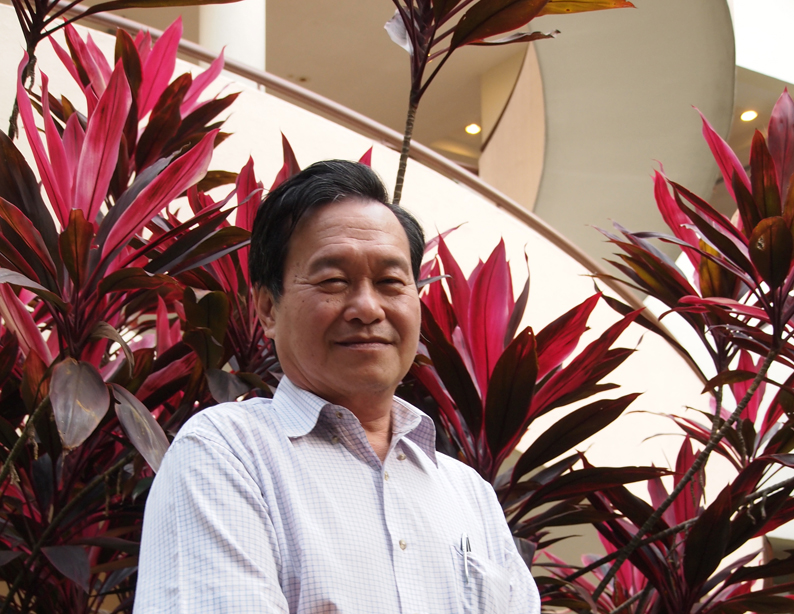
    Well, Tan Kin Lian’s Singapore General Election Portal decided to respect the new restriction and ceased posting at 11pm the night before Cooling Off Day. Yawning Bread’s Alex Au (below) ignored the regulation and published a 1,600-word review and commentary on Cooling Off Day.

    YB-DSC_0004

    When I interviewed him before the GE, Andrew Loh said that he was inclined to challenge the restriction. “On principle, it’s ridiculous that there are media that are not subject to the rule while ordinary citizens are not allowed to speak up,” he told me. Loh managed the GE coverage for TOC and, sure enough, posted one article on Cooling Off Day and another on Polling Day.

    The behaviour of bloggers in 2011 was thus a continuation of what we saw in 2006, when there was some confusion about what exactly was permissible. Most simply ignored what they considered to be unreasonable restrictions and just went ahead. Once again we’ve seen that blanket bans are simply not going to be universally respected.

    More specific legislation such as defamation and contempt of court are a different matter. Those who operate openly and within Singapore’s jurisdiction do not take chances with these laws. The Online Citizen told me that it did receive a lawyer’s letter regarding a posting that defamed a PAP politician. The posting was put up by a reader in the comments section under one of its articles and was duly removed by TOC editors.

    The same comment was apparently circulating in Temasek Review, which is of course harder for regulators or lawyers to reach.

    This raises the question of why more blogs don’t simply go underground the way Temasek Review has. Note that when Sintercom was asked to register before the 2001 election, it chose to wind up and resurfaced overseas. When TOC was asked to register and gazetted as a political association, it responded by throwing a party, to signal to its supporters that it is hear to stay.

    The contrast between the strategies of Temasek Review and The Online Citizen is illuminating. On the one hand, TR’s underground guerilla approach to journalism made it Singapore’s top rumour site. Many seem to value its whistleblower function and are willing to tolerate the fact that it is wrong most of the time if it is right once in a while.

    TOC is more exposed to political risk and has to be more careful. Arguably, however, this limitation is more than outweighed by the benefits of being able to network face to face in Singapore.

    As long as citizen journalism remains a largely voluntaristic enterprise, it will be highly dependent on relationships of trust, and TOC has clearly been able to leverage on that. It has been moderately successful in getting donations and was very effective in drawing volunteers. They have also been able to work with civil society organisations and are playing a leading role in progressive movements.

    The clearest sign of the benefits of TOC’s transparency was its success in organising the pre-election inter-party forum last December, followed by the presidential debate in August.

    Fairness and balance

    Second, how do the blogs interpret the norms of fairness and balance in journalism?

    These principles have been central to professional journalism for around a century. However, their centrality to journalism’s mission has always been somewhat problematic and contested, as there is an even longer tradition of partisan journalism, and questions remain about how balance and independence are to be interpreted.

    The most striking characteristic of Singapore’s political blogs is that they are all on the same side of the ideological fence: all identify with the opposition underdogs and try to level the political playing field.

    “The mainstream media covers more establishment views. We try to balance it with other views,” said SGEP owner Tan Kin Lian (below). Added Gerald Ho, who edited the site day to day, “The field is lopsided. Even if we don’t put out the mainstream media view, you’ll still get to know it.”

    Such blogs are not necessarily pro-opposition by policy, but believe that the best way they can contribute is to provide a platform for such voices that are under-served by mainstream media. Said Andrew Loh, “We are not supportive of any opposition party, but we recognise that they don’t have a platform.”

    These websites do not believe it is their responsibility to aim for balance within their websites, claiming instead to provide a counterweight on an already unbalanced media landscape.

    “We have never claimed to be ‘balanced’,” said Andrew Loh. Joshua Chiang, who was TOC editor shortly before the election, added, “We are the balance.”

    Thus, critics who accuse the blogs of being unfair or one-sided are right, but should realise that their criticism is missing the point and is unlikely to cause bloggers sleepless nights. Their goal is a more balanced media system, not necessarily more balance within their individual blogs.

    Public opinion

    Third, where do they situate themselves in relation to their audience?

    Most journalists will say that their first duty is to the public. And most blogs brand themselves as representing a more authentic discourse than the mainstream media. So one might expect that these political sites position themselves firmly on the side of public opinion.

    While this is probably true of Temasek Review, the editors of all the other sites surprisingly expressed some disappointment with the public.

    They were not comfortable with simply following public opinion because they did not trust prevailing popular sentiments on many of the issues they care about.

    Alex Au put it most candidly: “I’m engaging in a war with my readers. It annoys me to no end.”

    He and other like-minded bloggers, especially in TOC, know from experience that some of the progressive causes that are dear to their hearts – such as gay rights, foreign worker rights and the dealth penality – are not popular with the masses.

    Therefore, the task of winning votes for the opposition was less important than raising the level of political maturity of Singaporeans, including opposition supporters.

    Temasek Review on most days may have more traffic than TOC, Yawning Bread and SGEP, but the latter sites do not think of themselves as taking part in a popularity contest. They of course tracked their page views and unique visitors – and drew immense satisfaction from rising numbers – but they were reluctant to let this dictate their sense of what is important.

    These bloggers I interviewed see themselves in a long-term struggle, in which the quality of the debate matters as much as their outreach or the election outcome. As Gerald Ho put it, “We don’t bother about numbers. Even if it’s just 1%, let’s make that 1% secure.”

    Joshua Chiang (below) said, “It’s pointless to change the government if the people are still the same. It’s not our agenda to change the government. It’s to inform and educate people.”

    Tan Kin Lian, founder of Singapore GE Portal

    The attitude of these editors to mass opinion is most apparent in the policies on reader comments. At one extreme, Temasek Review practices no moderation, while at the other, Alex Au is resolute in his policy of pre-moderation. He is unapologetically elitist as far as the standard of writing goes: comments are only approved if they meet his benchmarks. “I want to raise the IQ level of political discourse,” he said.

    Such diversity in approaches to managing blogs should not be surprising –the distinction between mass market, popular tabloids and the elite press was found in journalism long before the arrival of new media.

    This and the other editorial choices that I have outlined are ultimately dilemmas with no obvious answers. They involve trade-offs, reflecting unresolved tensions in the democratic role of journalism. We can be sure that alternative media will continue to evolve in Singapore, and we can be equally sure that they will not converge around a set of common norms. We can expect them to continue to be fragmented and diverse in their interpretations of their journalistic mission.

  • Covering a changing political landscape: the challenge for national media

    by

    CHERIAN GEORGE

    September 13th, 2011

    pe-toa-payoh-DSC_00111

    This article is based on a talk given at a Singapore Press Club forum on Reporting the 2011 Elections on 13 September 2011 at the SPH Auditorium.

    This year’s elections did not fundamentally alter Singapore’s power structure, but they have transformed the political landscape that the powerful must traverse. The terrain has become more competitive and less predictable.

    This affects our national media in two ways. The good news for professional journalists is that the Singapore story is becoming a lot more interesting. We know that more voices make for a better story and there are certainly more voices to report now.

    Even if not all those voices speak sense, an active conversation is more engaging than a monologue and ultimately more likely to enlighten, especially when facilitated by media that feed that conversation with facts, context, reasoned analysis and thought-provoking commentary. After the Presidential Election, for example, it was widely recognised that the debate had been educational for Singapore’s polity. A more open and inclusive dialogue is good for democracy and good for journalism.

    The second way in which the news media are affected presents more of a challenge. The terrain has changed not just for newsmakers but also for the press as an establishment institution.

    For the national media, it’s not just a question of keeping eyes and ears open to report the changes around them. They also have to decide where to stand and when to move, if they want to play their role effectively without being either swept aside by the tide of change, or run down by conservatives who want to blame the media for their setbacks.

    What won’t change anytime soon is the core principle of Singapore’s media system, that freedom of the press must be subordinate to the needs of governance. Singapore’s licensed news organisations have no choice but to work within these bounds.

    But it’s important to note that the official justification for media subordination was never that leaders have a mandate from heaven or a god-given right to rule. Ever since the principle was articulated by Lee Kuan Yew in 1971, it’s been justified in democratic terms: it is the “purpose of an elected government” that must have primacy over press freedom. Our government is the embodiment of people’s will whereas nobody voted for the press, the theory goes.

    Logically, this principle requires the media to be independent during elections. Since the press is one of the main avenues for political parties to present themselves to voters and for voters to learn about their choices, independent and well functioning media are essential for free and fair elections.

    Therefore, government control of the press, by its own argument, cannot be unlimited. To the extent that government control interferes with the role of the press in connecting candidates to voters, the democratic justification for that control is weakened. True, nobody elected the press, but if this important democratic institution is seriously undermined, the government can’t claim to be freely and fairly elected either.

    This is why even Singaporeans who are not schooled in democratic theory and who show no great appetite for removing the PAP from power are nevertheless sensitive about any unfairness they perceive in election coverage by national newspapers and broadcasters.

    But what does it mean to be fair and balanced in the context of what is, in effect, a dominant party state?

    Does scrupulous fairness demand equal weight for every party, such that the Singapore Democratic Alliance, one of seven groups contesting this year’s GE, gets one-seventh of space and airtime?

    Or perhaps we should base coverage on the number of seats contested. In which case, in the run-up to the Presidential Election, should the media have devoted as much attention to Ooi Boon Ewe and Andrew Kuan as they did to the Tan Quartet?

    Or what if Tan Lead Shake’s Democratic Progressive Party has enough candidates with enough money to contest every seat in the 2016 election. Should the press then give it equal coverage to the PAP – and more than it gives to the Workers’ Party and SDP – just because the DPP has found 87 men and women who are not below 21, not undischarged bankrupts, not declared of unsound mind and not ex-convicts?

    The Elections Department is constitutionally required to preserve the fiction that all candidates are equal. But should the press do so? We would expect journalists to exercise judgment and not be mindlessly balanced.

    Accordingly, the free press in Britain sees no obligation to give equal coverage to the Monster Raving Loony Party, for example. The BBC is mandated to be impartial, but its editorial guidelines say that “impartiality does not necessarily require the range of perspectives or opinions to be covered in equal proportions”.

    “Instead, we should seek to achieve ‘due weight’.  For example, minority views should not necessarily be given equal weight to the prevailing consensus,” it says, adding, “Nevertheless, the omission of an important perspective, in a particular context, may jeopardise perceptions of the BBC’s impartiality.”

    In other words, the media should exercise certain qualitative judgments to provide a diversity of opinion but also ensure that its limited time and space – and more importantly the audience’s limited attention – is not wasted on loony and fringe views.

    The press in free societies also gives less attention to politicians who are unlikely to make a practical difference to people’s lives – even if they have something important to say.

    Green Parties have an important message for the electorate, but the New York Times is less likely to give coverage to the American Green Party than Die Welt gives to the German Green Party, simply because the latter is more likely to be part of a ruling coalition in Germany’s proportional representation system.

    Similarly, the American press treats its Presidential Election as a two-horse race even though Ralph Nader has been contested the last five elections. Conversely, in Britain, policy alternatives mooted by the Shadow Chancellor are given significant coverage because there is a realistic chance in Britain’s two-and-a-half party system that the Shadow Chancellor in this term of Parliament will be the Chancellor in the next.

    In Singapore, no matter how credible the blueprints of the opposition are, we should not be surprised if journalists exercising independent news judgment conclude that any statement from Finance Minister Tharman Shanmugaratnam is more newsworthy than Tan Jee Say’s alternative economic plan. Tan may move hearts, but Tharman moves markets and affects the economic decisions that households and firms make tomorrow.

    Mainstream journalism aims to report the news as it is, not the news as it should be.

    But what are the implications of this fairly universal approach to journalism in a country with a hegemonic, dominant party? By treating alternatives as less newsworthy because there is so little chance of these alternatives becoming reality, is there not a danger of journalism being biased for the status quo and contributing to a self-fulfilling prophecy?

    Absolutely. This is why, as a vital supplement to mainstream journalism, we should value alternative media, including partisan journalism, where what is today’s fringe is given the chance to flower into tomorrow’s mainstream.

    The vibrant alternative online space does not, however, absolve mainstream journalism of grappling seriously with the dilemma of how the establishment press can remain relevant a time of extraordinary change in Singapore’s political culture.

    Journalists will somehow have to keep their feet on the ground and recognise the reality that the PAP government remains the most newsworthy newsmaker for at least another 10 years, while at the same time facilitating discussion of the range of alternative ideas and visions being explored outside of Cabinet – on the fringes of the PAP, within the Opposition, in universities, online forums and in civil society.

    The leading opposition parties in Singapore are, right now, neither as inconsequential as the Monster Raving Loony Party nor as significant as the opposition Labour Party in the UK. They fall somewhere in between. Which end of the spectrum they are closer to, and how much weight they are due, is one of the most important strategic assessments that the national media will have to make in the coming years. Get it wrong and Singapore’s press will – not for the first time – find itself on the wrong side of history.

    Whatever principles and strategies the media settle on to play their role in this evolving landscape, I would urge them to be transparent about it and to be ready to account for it. Gone are the days when the media could simply brush aside critics with stock phrases like “we stand by our coverage” when criticised. The public now demands greater accountability from all establishment institutions, including the press.

    I am hopeful that this is in journalism’s interest: in many cases, more transparency and more communication about why the media do what they do will not only push journalists to improve their quality, but will also earn respect, however grudging, from fair-minded Singaporeans.

  • Media censorship: us versus them?

    by

    CHERIAN GEORGE

    September 11th, 2011

    Singapore was presented with a double bill feature on censorship this month. There was the Wikileaked diplomatic cable reporting that young reporters felt frustrated by newsroom gatekeepers. And there was Tan Tarn How’s play, Fear Of Writing, staged by TheatreWorks. Between the two, I found Tan’s work of fiction truer and more illuminating.

    Although many were gleefully scandalised by the leaked cable, it’s hard to figure out what the fuss was about. I guess the overreaction is partly down to the fact that most people are in workplaces where you can’t criticise your bosses and get away with it; they are not familiar with newsroom culture, where employees speak their mind.

    Perhaps it’s also because some Singaporeans haven’t been paying attention for the last 40 years. That’s how long it has been official and explicit government policy that press freedom in Singapore must be subordinate to the government’s priorities. Under this system – as one of my editors put it simply – news media have to balance political as well as professional journalistic judgments.

    So the only choice for a Singapore newspaper is who must carry out that balancing act, not whether it must be done.

    When I was at ST in the 1990s, the working arrangement was clear. Reporters and columnists like me were to focus on being good journalists, write for our readers, and not try to second-guess what would make the government happy. Instead, our editors would shoulder the burden of making those difficult political judgment calls.

    There were of course times when I thought my editors were too conservative in those judgments, and I regularly joined my peers in that universal pastime of griping about our bosses. The public would routinely pillory the press (“Us Singaporeans love democracy, them journalists don’t.”) and within the press we minions would absolve ourselves of blame by passing the buck (“Us reporters are fine, them editors are the problem.”).

    In more honest moments, though, I admitted to myself that my editors were actually sparing me from the thankless task of appeasing an impossible-to-please government. Yes, to keep within OB markers, they would repair some of my stories. But at least they never tried to repair me. In 10 years at SPH, despite several run-ins with government, not once did an editor tell me that I should take up less of his time and energy than I did.

    The Wikileaked cable, if it is an accurate report of what the journalists intimated, is perhaps a healthy sign that that old division of labour still persists. Reporters report, columnists opine – and editors edit, trying to find that elusive balance between serving a demanding audience and keeping an even more demanding government at bay.

    Given that the PAP government is not going to revise its philosophy on managing the media, the only other politically viable alternative formula would be for the entire newsroom to internalise the PAP’s thinking. That would be the only way to get rid of the frustration in the newsroom, but it would also kill what’s left of journalism.

    On my last day at ST, I told my editor that people would probably speculate that I was leaving because Singapore journalism was too controlled. I wanted him to hear it from me that this was not the case: I was leaving for personal reasons.

    I don’t know if this message registered with my editor, or if he cared. It didn’t matter to me either way, because I brought this up not for his sake but for mine: I felt it was important to be honest with myself and not indulge in a self-constructed myth of martyrdom. I had not liked, but accepted, that the controls were part of the territory: the downside that comes with the privilege of being paid to do something one loves, and in the national newspaper to boot.

    Twelve years on, I’ve tried to capture the nuances and contradictions of the Singapore press system in an academic book that I hope will be published soon. But I have to say that a book that tries to stick to facts and reasoned argument cannot capture the true essence of censorship and self-censorship in a society.

    This is why I think Tan Tarn How’s Fear Of Writing is such an important contribution. He is uncompromisingly critical of government mind-control but also, and more importantly, demands that we take a collective, unflinching gaze into the mirror. We have lost the keys to the empty spaces in our own hearts, he charges.

    It’s unlikely that any other writer could have pulled off this masterly work. Tan has had a uniquely comprehensive tour of duty through the Singapore media: he has been as a reporter, columnist, foreign correspondent and editor with the Straits Times, a scriptwriter for national television, an award-winning playwright, a leading activist with the ArtsEngage movement for artistic freedom, and a media researcher. He is intimately familiar with ways of thinking about media and politics, and how Singaporeans both resist and rationalise the status quo.

    This year’s other big political play, Cooling Off Day by Alfian Saat, was more entertaining and more marketable, milking the immediate post-GE mood. The Wikileaks on the press were good for gossip. But it is Tan’s play that will pass the test of time. He doesn’t cop out by framing the political as us versus them. Ultimately, it is always and only about us.

    Originally posted at journalism.sg

  • Co-founder of The Online Citizen launches new alternative site

    September 1st, 2011

    Andrew Loh, one of the editors of The Online Citizen until just after May’s General Election, has launched a new socio-political website, Public House. The site doesn’t have an “About Us” page yet, but Loh is understood to be one of the site’s founders.

    Loh, who helped to create TOC in 2006, led the site’s GE coverage. He left shortly after. Since then, he has been writing regularly for Yahoo! News. He is known for his passionate writing on social issues and progressive causes. His latest venture continues in that mould: he has an article appealing to new President Tony Tan to save Malaysian death row inmate Yong Vui Kong.

    An article by Eric Tan (presumably the former Workers’ Party CEC member) calls on the transport minister to consider opposition parties’ ideas for improving Singapore’s public transport system.

    It is not yet clear how, if at all, Public House plans to distinguish itself from the more established TOC. But given Loh’s experience in running an alternative group blog, it’s safe to say that Public House is one work in progress that’s worth watching.

  • MediaCorp’s election coverage let off with a light touch

    by

    CHERIAN GEORGE

    September 8th, 2011

    MediaCorp’s controversial television coverage of this year’s general election has been given the gentlest of feedback by a government-appointed consultative panel, the Programme Advisory Committee for English Programmes (PACE).

    MediaCorp had been roundly criticised by the public for excluding the Singapore Democratic Party from a pre-election studio forum that involved the PAP and other opposition parties. Then, on election night, viewers were astounded by MediaCorp’s refusal to report the latest intelligence on the counting, even when confirmed by the candidates and carried by the Straits Times’ digital outlets. Wits started calling CNA “Channel NewsAfter”.

    PACE said in its report:

    “In terms of the coverage of breaking news, PACE commended MediaCorp for its extensive coverage of the General Election held in May 2011 and its round-the-clock updates on the campaign developments. The Committee also observed the effort put in by MediaCorp to provide balanced coverage of the 2011 General Election, which was especially useful with so many political parties contesting. However, the Committee commented that the presentation of election-related news could have been tightened and delivered more smoothly and professionally. Members also commented that while they understood the need for CNA to ensure that the results were verified before they were announced on air, the delay between announcements on other new media platforms such as Facebook and Twitter, and the updates on CNA did not reflect well on the latter as a national news channel.”

    PACE was set up in 1995 to provide feedback on the range and quality of English programming. Members are drawn from a cross section of society, including the arts, sports, academia, nongovernmental organisations and the private sector.

    MediaCorp’s reply, included in an annex to the report, said:

    “CNA noted the comments that the presentation of election-related news could be tightened and delivered in a more professional manner. The channel explained that while viewers have a right to expect more out of presenters for such a high profile programme, the demands from a programme providing “live” coverage of the election results are greater than that of other programmes. The presenters had multiple duties during the programme, including rolling out information as it came in, analysing and interpreting results on the fly while liaising with several key production team members in the control room.

    “CNA added that a key element in the coverage was the lack of predictability, not just of when and what results might be announced, but also the follow-up production treatment of the information, for example, the team had to decide whether the show would be crossing to on-site reporters to field reactions or to another location for other developments. In addition, there was also a need to be mindful of the choice of words, facial expressions and the ideas to be conveyed to viewers.

    “With regard to the “delay between announcements on other new media platforms”, CNA explained that MediaCorp had taken the editorial stand to go with only the official results and Vote 2011 Singapore therefore announced only results announced by the Returning Officer.”

    MediaCorp’s defence of its policy against reporting unconfirmed results remains puzzling. While responsible broadcasters should certainly avoid the kind of fiasco that American networks caused in the 2000 Presidential Election – when they prematurely declared the election over based on inaccurate exit polls –  there are well established ways for news channels to share intelligence with their viewers and listeners, in context and without misleading them.

    The BBC, for example, sometimes prefaces news breaks with such lines as “Reuters is reporting that…”, concluding with “We haven’t been able to independently verify this report.” This indicates to the audience that the news is coming from an ordinarily credible source, but that the BBC is not ready to state it as fact.

    Of course, such a policy requires the broadcaster to be willing to attribute the news break to a competing news organisation. Broadcasters that put their audiences first are willing to do so. The main mental block for MediaCorp on election night was probably not the risk of misleading its audience, but its reluctance to attribute unconfirmed reports to the Straits Times (all of which turned out to be accurate). For several years, Caldecott Hill’s false pride has made MediaCorp allergic to ever mentioning SPH outlets as a news source, despite the latter accounting for the bulk of Singapore’s journalists.

  • Tan Cheng Bock campaign the most net-savvy?

    August 25th, 2011

    An analysis by a public relations consultancy suggests that the Tan Cheng Bock campaign has been the most digitally savvy in the 2011 Presidential Election race, slightly ahead of Tan Jee Say. See its report here.

    However, even if Tan Cheng Bock is campaigning the hardest online, it appears to be Tan Jee Say who appeals most to Singapore’s more critical netizens. Temasek Review endorsed him early in the campaign. Now, the godfather of Singapore’s socio-political bloggers, Alex Au, has come out in support of the former civil servant:

    “He may be a johnny-come-lately, but he really does hold certain deep convictions: about social equity, about the whole purpose of economic development, about the moral responsibility to lead a people in a certain direction that is more constructive than self-destructive, about the importance of respect for human rights and human life. When he speaks about conscience, he means it,” writes Au in his Yawning Bread blog.

    Ng E-Jay of SGPolitics has also endorsed Tan Jee Say: “Mr Tan Jee Say’s political ideals will serve Singapore well. He has a heart for the people. He represents change and progress, and the empowerment of the people.”

    The Online Citizen has not endorsed any candidate. One of its leading lights, Leong Sze Hian, is helping Tan Kin Lian. However, TOC’s readers are most enamoured of Tan Jee Say. Of more than 2,200 people who took part in a TOC survey, Tan Jee Say polled more support than the other three candidates combined.

    So has Tony Tan’s groundbreaking attempt to reach out to bloggers fallen flat? Well, despite the risk of alienating TOC’s base, its editor Ravi Philemon has declared that Tony Tan “may not be half as bad as most of the online world makes him out to be”. In the solidly anti-government online environment, this is about the highest praise that any establishment figure could hope for.