
Category: Journalism.SG

  • Rationality vs political expediency in internet policy

    by

    ARUN MAHIZHNAN

    June 24th, 2008
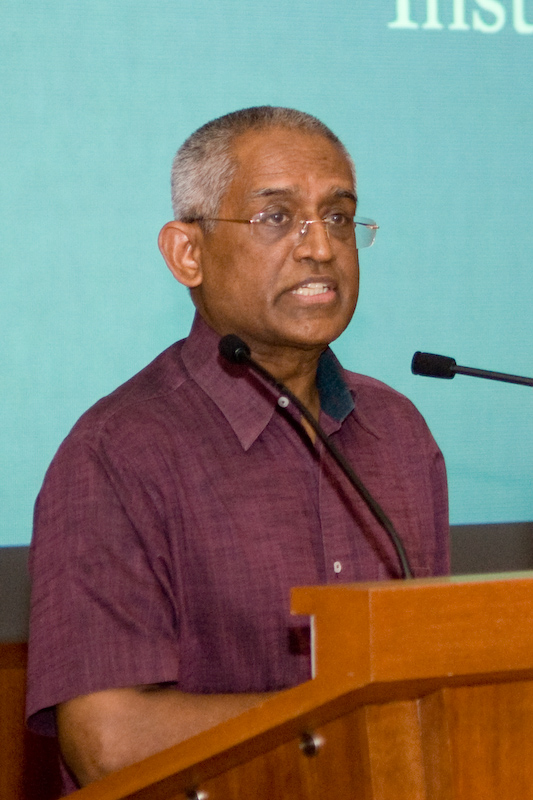
    dsc_1178Address at the Seminar on Internet Regulatory Reform, 21 June 2008.

    Since the time allocated to me is just eight minutes, let me make just eight quick points:

    First, I want to comment on the process of your proposal. I would like to add my congratulations to the authors of this proposal for making a thoughtful and persuasive case. But I’m even more impressed with the fact that this is not a unanimously agreed upon document – which is a rarity in Singapore. It is customary in Singapore for committee members to sign on even if they don’t agree with all the conclusions, because that is the politically correct thing to do. Your process shows a level of maturity among the bloggers that recognizes that there is no single right answer to our problems. Especially so in the internet world. As we all know, it is a constantly and rapidly changing world and defies easy solutions. And when I looked at the specific points where there IS disagreement, they actually reflect the dilemmas that many others are also faced with, including the government.

    My second point leads from there which is political expediency. Even where all of you have unanimously agreed upon, because it is so rational, there is no guarantee that the government will accept that recommendation — because it may not be politically expedient at this point in time. There is a sharp distinction between what is rational – rational even to political leaders – and what is politically expedient. As we all know, politics is supposed to be the art of the possible and there are a number of aspects of this proposal that could be argued as politically inexpedient at this point in time. Personally, I don’t want to get into a debate on that point because I can’t speak for politicians. However, even if some of your rational proposals are not accepted in this round, they should remain in public discourse so more ground can be gained over time which will increase the chances that they are accepted at a later time. One good thing we all must take note of: the nanny state that used to think it can control most things, if not all things, is in retreat. Technology has seen to that. But the alternative to the nanny state is not a totally free state, as the authors of this proposal have clearly acknowledged.

    That acknowledgment leads to my third point – the role of symbolism. The state cannot move quickly from saying “I can do everything” to “I can do nothing.” No state can. The state must and does take positions along a spectrum of possibilities and some of them are effective in practice and some are not. One argument by the Singapore government is that even if the measure is not effective in practice, it has potency as a symbolic gesture. The 100 banned websites fall into this category of symbolism. The same argument is likely to be applied for several other restrictions on the internet. If, indeed, there is an effective symbolic value — like our national anthem which most people don’t understand but sing with feeling anyway – there is a case for holding up those symbols. But there is little evidence that the banning of 100 sites has had that effect. Instead, we have much evidence that it has brought about a completely undeserved reputation by the lumping of Singapore with China, North Korea and Myanmar as totalitarian internet regimes, when, in fact, our internet is vastly freer than theirs. This kind of symbolism is bringing us ill repute rather than high credit. So the government has to be far more astute in employing symbolism which may boomerang on us.

    My fourth point is also related to the question of repute but in the domain of law, which this proposal addresses in several instances. When laws are framed too vaguely or too broadly or when they are hanging over our heads like the sword of Damocles with the promise that it will be applied with a light touch or when laws are created that are unenforced or are unenforceable in practice, or seen as self-serving for the party in power, they generate a poor reputation for our legal system. This is a pertinent and crucially important point. Many internet regulations are clearly questionable in this regard. However, there are indications that the government is reviewing such laws and as this proposal contains valuable insights from the users’ point of view, they should be taken into account.

    My next point is also related to the legal domain and it refers to the dictum “regulate what is regulatable.” There is a paradigmatic difference between the old media environment and the new media environment. The power of the state now has to confront the power of individuals and especially the power of those outside its unilateral jurisdiction. Fortunately, there has been a realization of this fundamental shift in power balance and government spokespersons themselves are now talking about trying to regulate what is regulatable. In this regard, your various proposals on saving Singapore from the embarrassment of impotent laws and from disrepute to the judicial system itself are likely to be recognised. However, while judicious legislation is necessary, it is not sufficient to deal with the problems of the internet. And that is my next point.

    My sixth point addresses the need for community consultation and moderation, so strongly argued in this proposal. In one sense, this is not all a new message for the Singapore government. It has, for long, convened numerous committees made up of what it considers to be knowledgeable and concerned citizens, representing the community at large, to seek their views and advice. I do think the government would welcome suggestions to improve such mechanisms, including the proposed Internet Content Consultative Committee (IC3). I also think that the multilateral composition of the IC3 makes for a better consultancy forum than currently available. But it would be naive to think that such consultative committees would make a dramatically different impact as long as these committees are constituted and controlled by the government. Political expediency will invariably kick in and constrain the outcome.

    My seventh point addresses what I consider to be the single most important piece in the whole matrix of legislation, consultation and consensus building. The way the new communication technologies are developing, there is little or nothing the state or even sagely committees can do to save the public unless the public is prepared to save itself. Every single day, our most vulnerable group, our children, as well as we adults are exposed to enormous amounts of information, some which are going to be clearly undesirable by our individual reckoning. The best way to resist these undesirable elements is to build what Minister George Yeo long ago articulated as the social immune system. We have to invest a lot more thinking and resources into building this system which was mooted but left to languish for a long time. And it is also important to recognize that this system will not have a completion date. The system will forever be a work in progress as technology changes and as our collective responses change and adapt. But for the work to truly progress, one of the building blocks we need is exactly what this group of bloggers is doing – a robust and honest engagement with the issues at hand and a public sharing of their views. Social immune systems cannot be mandated from heaven. They have to build from ground up.

    My eighth and final point is to salute the blogging community for filling up what has been called the missing speech. We often talk about harmful speech and offensive speech but do not think of the missing speech – the speech that is necessary for the public to learn about themselves and among themselves, the speech that is necessary to cultivate civil literacy, the speech that is necessary for citizens to use to govern themselves. The blogging community in Singapore is taking a significant initiative in this regard and I hope it will grow into a speech that will be heard loud and clear.

    Arun Mahizhnan is the deputy director at the Institute of Policy Studies.

  • Why we need a bottom-up internet content consultative committee

    by

    CHERIAN GEORGE

    June 22nd, 2008

    The bloggers’ proposals for Internet freedom include a call for an Internet Content Consultative Committee (IC3) through which society can take a stand on provocative internet content, thus reducing the need for government action. This proposal met with considerable interest at the public forum on 21 June. (See Yawning Bread’s comprehensive report here.) It has also been discussed in The Straits Times’ Forum pages, attracting both reactionary and supportive voices.

    FURTHER THOUGHTS

    The following are further, personal, reflections stimulated by the 21 June forum.

    What should be the government’s role in IC3?

    The government may want to take the lead in organising a community moderation body. Some of the bloggers feel that this is a realistic approach, given Singapore’s top-down political culture. However, there is no reason to put all eggs in one basket. There is merit in an entirely bottom-up IC3 that can operate in parallel. There is no reason why there should be a single body serving this mission and claiming to monopolise the role of community mediation.

    The IC3 can be thought of as just one element of an evolving Media Accountability System (MAS). In countries with a well developed MAS, there is usually a diversity of institutions ranging from formal public bodies with some legal powers (like the UK’s Offcom) and strong inter-media bodies (such as Sweden’s Press Council) to grassroots media watchdogs (such as FAIR in the US).

    How can we ensure that the IC3 is effective?

    There’s a tendency to think of how to engineer a perfect institution. Such discussions get bogged down in debates about who should be on the panel, and so on.

    Experience with MAS bodies elsewhere, however, shows that no matter how carefully they are structured, they are ultimately judged by their output. There are no shortcuts. The IC3 will develop a reputation for sound judgments if it succeeds in delivering sound judgments. Then, it will grow in influence.

    Are the bloggers offering to take over the government’s job?

    Yes and no. Yes, there is a crying need for society to reclaim some of the functions that we have for too long been delegating to the government. This is a real national problem that both government and people recognise. People need to do things for themselves, and not automatically rely on the authorities. The regulation of social values is an area that is particularly ripe for more citizen participation. After all, if these are genuine social values that we are trying to protect, why shouldn’t society play a bigger role?

    However, if the question is whether IC3 should have government-like powers, the answer is absolutely no. The IC3 would use moral suasion only. It issues opinions and nothing more. It would not have powers to investigate anyone, let alone to arrest, fine or jail them.

    Indeed, one of the main rationales of the proposal is to substitute power and force with persuasion and influence. The bloggers trust that, in many cases, problems can be resolved within the community through persuasion and moderation, thus minimising the need for even light touch government action.

    Isn’t it naïve to think that the government would agree to this?

    The IC3 proposal is actually in keeping with the direction of regulation in Singapore. In other sectors, such as film censorship, there is already community consultation. In the past, censorship decisions were made by civil servants charged with the responsibility of making judgments on behalf of the rest of society. This system was modified many years ago, such that we now have a system of review by appeals committees made up of citizens. The bloggers are merely asking for similar principles to be applied to internet regulation, but with even less government direction than in film censorship.

    How would things have been different if IC3 had existed during the “racist bloggers” incident?

    In the “racist bloggers” incident, prosecution arose from police reports made by internet users. We don’t know what motivated those police reports. If the complainants really wanted to see the bloggers behind bars, they would have gone ahead and made police reports whether or not IC3 existed. However, it is quite possible that what the complainants wanted was a strong public signal that the bloggers had crossed the line and violated values that the country holds dear. If so, loud and clear condemnation by an IC3 may have been enough to satisfy the complainants.

    Indeed, such bottom-up stands are ultimately better for society, for they go further in reinforcing social norms than top-down police action is able to. In the end, that’s surely what Singapore has to aim for: strengthening what George Yeo called our “social immunity” rather than embarking on the ultimately futile enterprise of trying to eradicate by force every anti-social element in cyberspace

    WHAT THE BLOGGERS SAID

    Here is an edited extract from the bloggers’ 21 April submission, to put the IC3 proposal in context:

    In discussing media policy, some caricature the choices as a debate between those who understand the need for regulation and those who want a free-for-all. This is a false debate. The real issue is what kind of regulation can allow us, as individuals and as a society, to harness the benefits of free speech while minimising the harm that such speech can cause.

    Any restriction to freedom of expression must be justified by a social purpose. Any measures taken should restrict freedom of expression as little as possible, and not catch legitimate speech in the net. Since a democratic society depends on the free flow of information and ideas, it is only when it is imperative to limit that flow in the public interest that limitation justified: the benefits of any restriction must outweigh its costs.

    What regulation there needs to be should be based on clear, narrowly-tailored statutes and prosecution, not administrative discretion. However, only in extremis should there be prosecution, and only in instances where public safety is directly undermined. Otherwise, community moderation is the way forward, and to this end a consultative body (IC3) should be constituted. Matters of taste and offence to moral sensibilities should be mediated through community moderation, such as the consultative body.

    We believe that almost all of society’s legitimate concerns about the abuse of free speech can be addressed outside the formal regulatory system. Online communities have already evolved sophisticated norms of informal selfregulation. Internet forums are almost always moderated; bloggers keep an eye over readers’ comments appended to their posts. Popular sites heavy with pictorial or video content, such as YouTube, have their own rules forbidding salacious material.

    With the evolution of new technology and social practices of netizens, it is neither practical nor is there need for the state to play the role of a master moderator. Legislation and state intervention, except in extremis, do not provide the best solution in dealing with the emerging complexities of the Internet.

    The Internet is a social space, and social norms of leeway and consideration are constantly shifting. Although we have faith that these norms will evolve in pro-social directions, we agree that this won’t happen without some concerted effort. What is needed is a process through which online communities are represented in Singapore’s search for the right balance between individual freedoms and social goals.

    An Internet Content Consultative Committee (IC3) could comprise one-third independent content providers, one-third persons familiar with rapidly evolving digital technologies, and one-third regular consumers of Internet content (i.e. regular surfers). The IC3 would issue recommendations whenever controversies arise regarding digital content, for example offering its view when conflicts arise between the state and content providers alleged to have behaved irresponsibly.

    Rather than chill potentially-beneficial discussion of race and religion through overzealous legislation, it may be better not to resort to prosecution with regard to such speech. Instead, alternative forums – like the IC3 – could be more representative and conciliatory. It has the flexibility to provide a nuanced stand, speaking out against bigoted and insensitive content, without guillotining freedom of speech. Through its moral force, it can retard the propagation and exacerbation of hate-filled speech, while leaving the door open to further discussion of the issues raised by any incident. In the process, society is given an all-important chance to build up its “immune” responses against provocative words – learning in particular to challenge bad ideas with better ideas. In contrast, when government is overprotective, it forecloses society’s opportunity to learn and grow.

    The IC3’s deliberations should be open to public view – and digital technology can be harnessed to this goal. The objective over time is to subject more and more so-called “sensitive” areas to public reason, replacing intervention by the state (whether heavy handed or light touch) with people’s own capacities for discernment and judgement. The only viable long term response to the impracticality of internet censorship is to help Singapore mature as a society, online as well as offline.

    OTHERS’ VIEWS

  • Advertisers’ influence on media is nothing new, and won’t go away

    by

    PETER H.L. LIM

    June 21st, 2008

    Both the main media groups – Mediacorp and SPH – have sections that produce print and broadcast content sponsored by advertisers. Sometimes, that is clearly marked so that we know we are reading or viewing sponsored stuff. Sometimes, the true nature of the content is not apparent. I would say it is buyer beware. We have to be truly media savvy, really sharp to distinguish between news reporting and commentary that are not directly advertiser influenced, and contents that are.

    • Read the full column in Today. Peter Lim is a former editor in chief of The Straits Times group of newspapers.

    See also Jamie Lee’s article on this website, which is quoted in Peter Lim’s piece.

  • Gopalan Nair case moves media activism to a new level

    June 9th, 2008

    Media activism in Singapore has entered new territory with Gopalan Nair’s extraordinary challenge to the state, which has resulted predictably in his arrest. While Singaporeans are not unfamiliar with government restrictions on freedom of expression, what makes Nair’s case stand out is his deliberate provocation, designed to embarrass the government.

    Nair’s “come and get me” posting is found at his blog singaporedissident.blogspot.com. (For news reports on the case so far, see Today and Reuters). Nair’s actions may mystify most Singaporeans – even government critics and opposition members – who prefer to stay clear of legal trouble if they can help it. They were probably intended to expose the state’s iron fist and thus attract the attention of the international human rights community. In that regard, the stunt has worked. Amnesty International and Reporters Without Borders have already circulated reports on Nair’s arrest. Nair is now a US citizen, and may also be hoping that his country’s diplomats and politicians will add their voices to the protests. The San Jose Mercury News reported on 24 June that US diplomats have discussed the case with the Singapore Government and its ambassador in Washington DC.

    Nair’s seemingly reckless provocation of the Singapore authorities is very much in line with Chee Soon Juan’s strategy of the past several years, analysed in an earlier article on civil disobedience.

    Updates on the case:

    New charges

  • Viscion’s vision: marketing moves from the dark side to KPI

    by

    JAMIE LEE

    May 28th, 2008

    Media group Viscion employs journalists who will sell advertising space to boost its bottom line, but critics worry that journalistic integrity will be compromised.

    The sacred wall between journalism and sales has been torn down by the newest media company on the block, much to the dismay of media practitioners who fear that editorial content will increasingly pander towards advertisers’ needs.

    Viscion Media Group – a firm set up about one and a half years ago that publishes magazines such as Lexean and Playeur – has merged these two roles into a new job position known as the sales journalist.

    Sales journalists from all its five publications will be tasked to meet advertising clients and design a marketing plan, which could include advertisements, editorial, advertorial, events and product placements, said general manager Holman Chin, who spoke to journalism students from the Wee Kim Wee School of Communication and Information (WKWSCI) at a talk in February.

    “We are putting a key performance indicator to the advertiser. We say ‘if you spend $10,000 with us, we will guarantee $30,000 of coverage’,” said Mr Chin. “Sales journalists would write the pitch so there’s more knowledge of how the editorial would look and hence more trust.”

    Viscion received more than 30 applications for the job since it offered the position on various job sites between January and March this year while several members of the existing editorial team were interested in adding sales to their job scope, said Mr Chin in a follow-up email interview.

    Sales journalists would earn a commission at 2.5 percent of their basic salary, he added.

    The traditional media market has been hit by declining readership and advertising rates in recent years, particularly in matured markets such as America. Print-advertising revenue fell 9.4 percent to $42 billion in 2007 in the United States, according to figures released in March by the Newspaper Association of America and as reported by The Wall Street Journal.

    But Viscion said the Internet is not totally to blame.

    “Besides prostitution, the oldest industry in the world is probably publishing. This traditional industry now faces its greatest threat and common wisdom says it’s the internet invasion,” said the company’s press release on sales journalism.

    “However, the actual challenge comes from within as the industry views the interests of readers and advertisers as opposing,” noted Viscion, which has come out strong in Singapore’s saturated magazine market, breaking even last year and targeting double-digit growth for 2008.

    Join me Luke

    Viscion insists that advertising clients have no say over the editorial content.

    There should be no compromise of having a kinder product review in exchange for an advertisement space in Viscion’s magazines, said Sumana Rajarethnam, editor of Playeur – which competes with Maxim and FHM – and deputy editor of current affairs magazine Lexean.

    “Nobody would be able to buy a better review, period. If a product is not up to scratch, that is what we would write about in the review,” said Mr Rajarethnam in an email interview, adding that the names of all sales journalists are listed in the credits.

    “Of course there is a risk that journalistic integrity will be compromised, but the risk is no higher than with a journalist being sent on an all-expenses paid trip who is asked to write about it. Is there full integrity there?” he noted.

    Mr Chin added: “I would like to emphasize that we have a team of sales journalists and an editorial team. The editorial team operated independently of the sales journalists, however, the editor has final say over the content that the sales journalists produce. When it comes to editorial integrity, the editor is the last layer to ensure that what is printed is in keeping with our editorial objectives.”

    Yet sceptics at WKWSCI, Singapore’s first communication studies school, fear that with journalists doubling up as salesmen, such a practice conflicts with honest reporting.

    “When journalists are paid to write for clients, they could face potential conflict of interest – that of being an employee of their news agency vis-à-vis earning outside monies,” said Associate Professor Lee Chun Wah, who lectures on public relations at WKWSCI.

    “The line of ethics is problematic. Sales articles should be done by public relations professionals.”

    “As soon as you have a commission, the impetus is there to sell advertisements,” said WKWSCI journalism lecturer Mr Andrew Duffy and former reporter at the Singapore Press Holdings, who attended the talk.

    “I’ve written here, ‘Join me, Luke. Embrace the dark side and we will rule the universe as father and son.’ It seems to be going in that direction,” Mr Duffy said to loud chuckles from the participants.

    “I don’t see how you can maintain the journalistic integrity,” he added.

    Natural evolution

    But for Mr Chin – an ex-producer of National Geographic and Discovery Channel documentaries and a former banker in San Francisco where he was born – this is part of the natural and necessary evolution for the media if they want to survive in the increasingly competitive market.

    Journalists are already selling advertising space to clients in today’s media circle, albeit discreetly, noted Mr Chin, adding that he has similarly been offered editorial write-ups in newspapers if his company advertised in these publications.

    Declining advertising sales have already forced changes on editors’ roles, said former editor-in-chief of the English newspapers at Singapore Press Holdings Peter Lim, noting during a separate media talk that publications such as MediaCorp’s Today newspaper have already broken boundaries by once combining its Chief Executive Officer (CEO) post with the editor-in-chief role.

    “They were not supposed to make love; these were two contradictory jobs which were supposed to have dynamic tension and fight each other. The CEO produced the money whilst the editor-in-chief spent it,” said Mr Lim, now a media consultant.

    But long gone is the age of “Brahmin editors” – “holy” editors who were indifferent towards profit margins. Instead, the editorial department has to work with the advertising team, previously dubbed as “the guys with dirty hands who handled money”, he added.

    Newspapers such as The Straits Times previously forbad publishing photos that featured advertisers’ logos for fear of providing product placements, but have since eased up on such standards, Mr Lim said. Such publications also now run full-page advertisements on their front pages, once a sacred space reserved mainly for news.

    Viscion’s Mr Chin noted that for lifestyles magazines, the blurring of lines between journalism and sales is becoming more prevalent. Today’s magazines are already offering product placements in exchange for advertisements.

    “When we have 900 products, obviously advertisers who pay more will be given better positioning,” he added. “A watch is a watch. I’m not sure how much journalism is involved in featuring a watch.”

    By creating the position of a sales journalist, Mr Chin said two distinct journalist types would ultimately be created.

    “There are two types of writers. One that wants to win a Pulitzer Prize and one that is very good in sales,” a category that sales journalists would fall under, said Mr Chin.

    “I realise the implication of a sales journalist but this is where the world is going,” he added.

    “By creating the sales journalist, we are just being more forthright in our approach.”

    – Jamie Lee is a graduating student of the Wee Kim Wee School of Communication and Information, NTU. She has joined The Business Times. Her article was produced as part of a class on the future of journalism.

    See Peter H.L. Lim’s take on this issue here.

  • NUS student wins 2008 FCA Dennis Bloodworth journalism prize

    May 26th, 2008

    Lee Xin En, a student at the National University of Singapore’s Faculty of Arts and Social Sciences, has won the Dennis Bloodworth Memorial Journalism Prize, awarded by the Foreign Correspondents Association of Singapore. Her winning article, “Reluctant to Return”, examines why Singapore’s best and brightest studying overseas don’t want to return home. The first runner-up was Clarence Chua of the Wee Kim Wee School of Communication and Information, Nanyang Technological University.

    Read Xin En’s article here.

  • From light to lighter: Government signals direction of Net regulation

    by

    CHERIAN GEORGE

    May 8th, 2008

    With the government’s internet regulatory regime strained by new technologies, many among Singapore’s netizens expected that it would eventually tighten the rules. After all, how long could the authorities tolerate citizen’s wanton disregard for the OB markers in their use of the internet to distribute irreverent political commentary and even banned political films?

    Even as they gleefully rushed through loopholes, socio-political bloggers were glancing nervously over their shoulders, half expecting Singapore’s regulators to catch up with them.

    This week, the government gave its clearest indication yet that it is not considering any regressive steps in its internet regulation. In a response to policy proposals from a group of bloggers, the Ministry of Information, Communication and the Arts says that it is studying how (not whether) to evolve its 12-year-old “light touch” principle into a “lighter touch” approach.

    K Bhavani, press secretary to the minister, said:

    “MICA is well aware of the fact that Internet and new media technology have evolved by leaps and bounds since we introduced our light-touch approach in 1996. Back then, MICA had recognised the potential growth and impact of the Internet, and the tremendous opportunities and benefits that it will bring to all of us. We were also wary of its negative aspects.

    “Hence, our response to the Internet was to take a balanced light-touch approach. Our intent with this light-touch approach was to foster the growth of the Internet and to enable us to exploit its vast potential while safeguarding our society from its undesirable aspects. That 79% of our households subscribe to broadband and many Singaporeans, especially the younger citizens, own a blog or participate in some form of new media clearly show that the light-touch approach had not been without merit.

    “To keep up with the fast-evolving new media landscape, we have been reviewing our light-touch approach and are considering how we could take a lighter touch approach. We have appointed the Advisory Council on the Impact of New Media on Society (AIMS) in April last year to study the new media and how best to refine our regulatory framework.”

    The statement was sent to Alex Au and his “blogger friends”. The bloggers released the letter to the media. The Straits Times reported the development today.

    Among other things, the bloggers (who include the editor of journalism.sg) have called for an end to the ban on political films and registration of political sites. They also oppose the amount of arbitrary power in the hands of officials. They have suggested that more and more judgment calls be devolved to a non-governmental consultative body, weaning Singapore off its reliance on government to protect the public.

    The ballad of Mr Brown

    Mr Brown will celebrate his love for the government’s “lighter touch” on the Mr Brown Show on Monday morning, 12 May. Journalism.SG has promised not to give anything away, but we can say that it’s destined to be another instant classic.

  • What China can learn from our handling of Western media

    by

    LEE KUAN YEW

    May 7th, 2008

    With China struggling with bad press in the West, Minister Mentor Lee Kuan Yew says Beijing can learn from Singapore’s approach: 1. Give access to the Western reporters; 2. Don’t over-react to their negative coverage, just deal with them on their own terms, as businesses with bottom lines to protect; 3. Focus on building your reputation among the world’s decision makers, who will see things differently from the Western media. Over time, Singapore’s experience shows, media coverage will get more nuanced and respectful. Lee Kuan Yew was interviewed by Haslinda Amin of Bloomberg News on 29 April at the Istana. This is in an edited transcript of his remarks.

    I’m ethnically Chinese, but I’m not Chinese in my thinking and my mental outlook. Because I’m a Singaporean, I’ve been exposed to a British colonial education and a British education and exposed to American education and everything. So my outlook, my mental approach is different from theirs. I would laugh at the west. Just like, you know, they say “Singapore is a fine city.” Everything is fine, no chewing gum, no litter in the streets, it’s antiseptic, it’s sterile. I don’t take offence.

    People come here, people stay. It’s safe, 3 a.m. in the morning, you can go jogging by the marina, nothing happens to you, no rape, and no muggings. News gets out: “We are dull.”

    Now, we are not dull, we are quite cool. We’re going to have reverse bungee, all-night dining by the river and by the marina, two integrated resorts, Formula One. How do you explain that? Whether they like it or not, they have to shift the nuances.

    The Chinese should learn to do what we have done, just take the western media on the western media’s terms. I don’t tell the western media you can’t sell here. All I say is you allow me the right of reply. You are selling because you want to sell advertisements, not because you want freedom of information or because you want to enlighten my people.

    So when you write an article with a little sting at the end, which is not true. I claim the right of reply. You have written 5,000 words, I claim 500 words. They refused, and in that case, I will restrict you. I will not block you because you will say I’m afraid of what you said. But I will restrict you and allow the other people, the other subscribers to photostat, fax, and now scan. So now you allow me the right of reply, I get the right of reply, the writer who puts in all these poison barbs no longer appears so smart. You can twist my arm, I’ll wring your neck. So what are the facts? So, now we have reached a certain respect for each other.

    The Chinese can easily do that, but they don’t, I don’t know why. Maybe what they need is a growing middle class, educated in the west, familiar with the west, understands the rules, been to America, stayed there five years, 10 years, been all over Europe, Australia, Japan, whatever, fully understand the rules of the game and playing according to western rules, and they can win. Are they stupid? No. Are they evil? No.

    You take Tibet. Who started it? It was started by the Tibetans. The March incident, March 14. I was reading Jonathan Eyal who writes for our Straits Times. He was a commentator from London. He is from I think Chatham House, a very thoughtful man. He said if they had called in the newspapers right from the word go, and said, look, this is what happened. The Economist correspondent was in Lhasa when it happened and wrote about it. He was favorable to them. The rioters started killing people and they were not reacting. The orders were not to shoot, not to take on the rioters because they didn’t want trouble. Had they engaged the west, all this would have turned out differently.

    Why didn’t they? Because there was a chasm between their mental make up and that of the west. So they say all western correspondents out, that means you have got something to hide. I think that was not very wise. Supposing it was Singapore, do we say all correspondents out? No. I say look come on, stay, watch it, see what happens, see who started what.

    Are they [the Chinese] stupid? They can’t do what we do? No. Its just people at the people at the top have not been educated in the west, they have not been exposed to that kind of environment, that kind of rules of the game, and are not playing by those rules of the game.

    The day they build up an educated middle class, a large middle class, huge numbers of whom have been educated abroad, PHDs, MBAs in America, Europe, Japan elsewhere, and they are the people setting policies at the top, not people whose mental mindsets are from Soviet days, that day they will find they can play by the western rules and win.

    Olympics protests

    What the propaganda says, what the media says, and what the impressions leaders and top officials take away, are two different things. The Asian leaders will be there [at the Olympics]. There is no reason for them to offend the Chinese. I’ll be there personally and I’ve said so. I know what to expect because I’ve been there almost every year since 1976, sometimes twice a year. Those who go there, they talk about the pollution; the marathon would be disastrous for the runners, etc.

    I was there for the 50th anniversary of the founding of the republic, the People’s Republic – 1949, so that was ’99. And the sky was blue. So I asked our ambassador, I said “how is that so?” He said “Oh, for two weeks, all factories stopped for this great occasion.” And there was a great parade.

    I have no doubts that it will meet world standards, the venues will be world class, the airport, I was watching the Discovery Channel, bits of it, about how it will the biggest airport in the world, Terminal 3 or whatever they call it. It’s a construction marvel: British design, British architects, but their construction. Their building contractors, their engineers, executing British plans. And it’s breathtaking. And compared to [the troubled] Terminal 5 in London – it will not be like that. I’m quite sure of it.

    They will have rehearsals and rehearsals, soft openings and when the great day comes, it will breeze through and they will come back and say “God, what discipline, organization, mobilization of the population can do.”

    So, yes the media will go and say what human rights, this dissident arrested, that dissident put down, this fellow arrested, this chap disappeared, but people in the developing world, I can’t speak for Westerners, but Westerners at the very top are also getting to become quite sophisticated.

    But in Asia and in Africa, and in the developing world, they are asking themselves, how did this country, in 30 years, from such backwardness, suddenly make this great big leap into modernity. When all the western nations say, “the system is wrong, how is it?” That is what they are going to register.

    There is now growing, a certain Beijing consensus that is different from the Washington consensus: what is it you need to grow? Order, certainty, consistency, hard work, market-friendly policies, savings and investments, trade, education, and training. And they are conveying that message to all the leaders around the world and the Olympics will be another occasion.

    • Download the full transcript in PDF form from the Straits Times website.

  • Activists protest press laws on World Press Freedom Day

    May 4th, 2008

    World Press Freedom, May 3, is observed in many countries in the region, but is usually ignored by Singaporeans. This year, however, a group of independent activists ensured that there was at least a whimper of support for press freedom. Five activists – Chong Kai Xiong, Ho Choon Hiong, Isrizal, Noora Zul, Seelan Palay and Shafiie – posed for the camera with banners made out of sheets of newspaper, decrying press controls. The activists are mainly/all members of the new human rights group,  SG Human Rights. View the pictures here, and read Ho Choon Hiong’s blog here.

  • ‘Asian Values’? In East or West, people want more media freedom

    May 2nd, 2008

    A new poll of nations around the world finds broad worldwide support for the principle of media freedom and  opposition to government control of the media. Even in China – despite the official line that media should be propaganda organs of the communist party – the majority want more media freedom. The exceptions are Middle Eastern countries and Russia, where there is substantial support for regulation of news or ideas that are potentially destabilising. Singapore was not polled in this survey, which is published in advance of International Press Freedom Day (May 3). Click here for the full article.